

Every AI agent looks good in a demo. What matters is what happens after — once it’s handling live customer conversations, at scale, across every channel a business runs. That’s the shift happening now — reliability has replaced adoption as the deciding factor for AI in production.
Clients bring up a simple concern: what happens if an AI agent gets something wrong in front of a customer, or isn’t there when a customer needs it. Underneath it is a question of AI governance and infrastructure reliability, even if nobody calls it that in the conversation. That’s the door Partners can walk through — and Yellow.AI and Sinch each open a different side of it.
Yellow.AI: Testing and Validating AI Before It Reaches Customers
Yellow.AI’s agentic AI platform is built around one idea: an AI agent should be thoroughly tested before it ever meets its first customer. Its AI Copilot gives teams full visibility into an agent’s reasoning, prompts, and decision logs, and lets them test scenarios across chat, voice, and WhatsApp before anything goes live — catching technical errors, knowledge gaps, or hallucinated responses well ahead of a customer conversation.
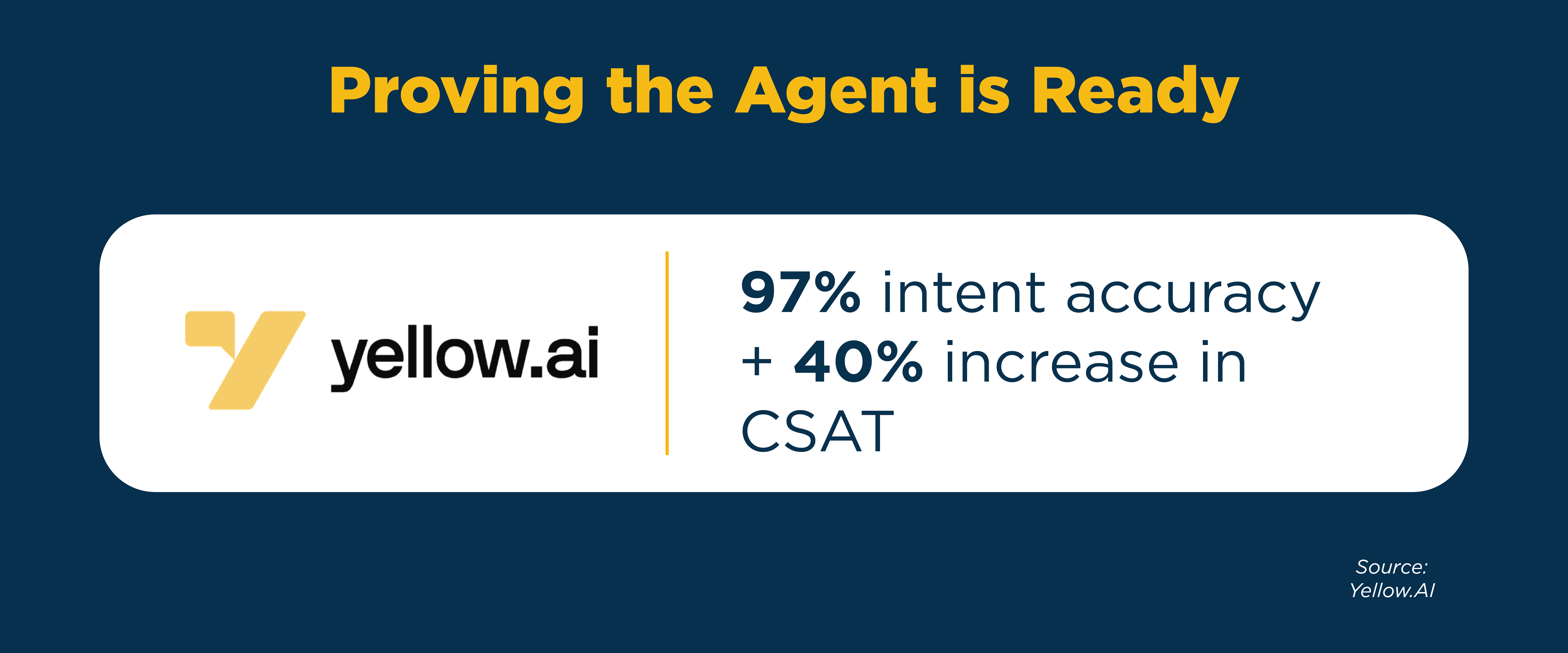
Automated Testing goes a step further: it auto-generates test cases straight from a company’s own SOPs and product documentation, runs persona- and channel-specific test cycles at scale, and enforces SLA, tone, and compliance guardrails throughout development. The reported payoff is 97% intent accuracy and a 40% increase in CSAT, giving clients confidence in their AI agent well before launch day.
Sinch: Building the Infrastructure AI Agents Need to Be Successful
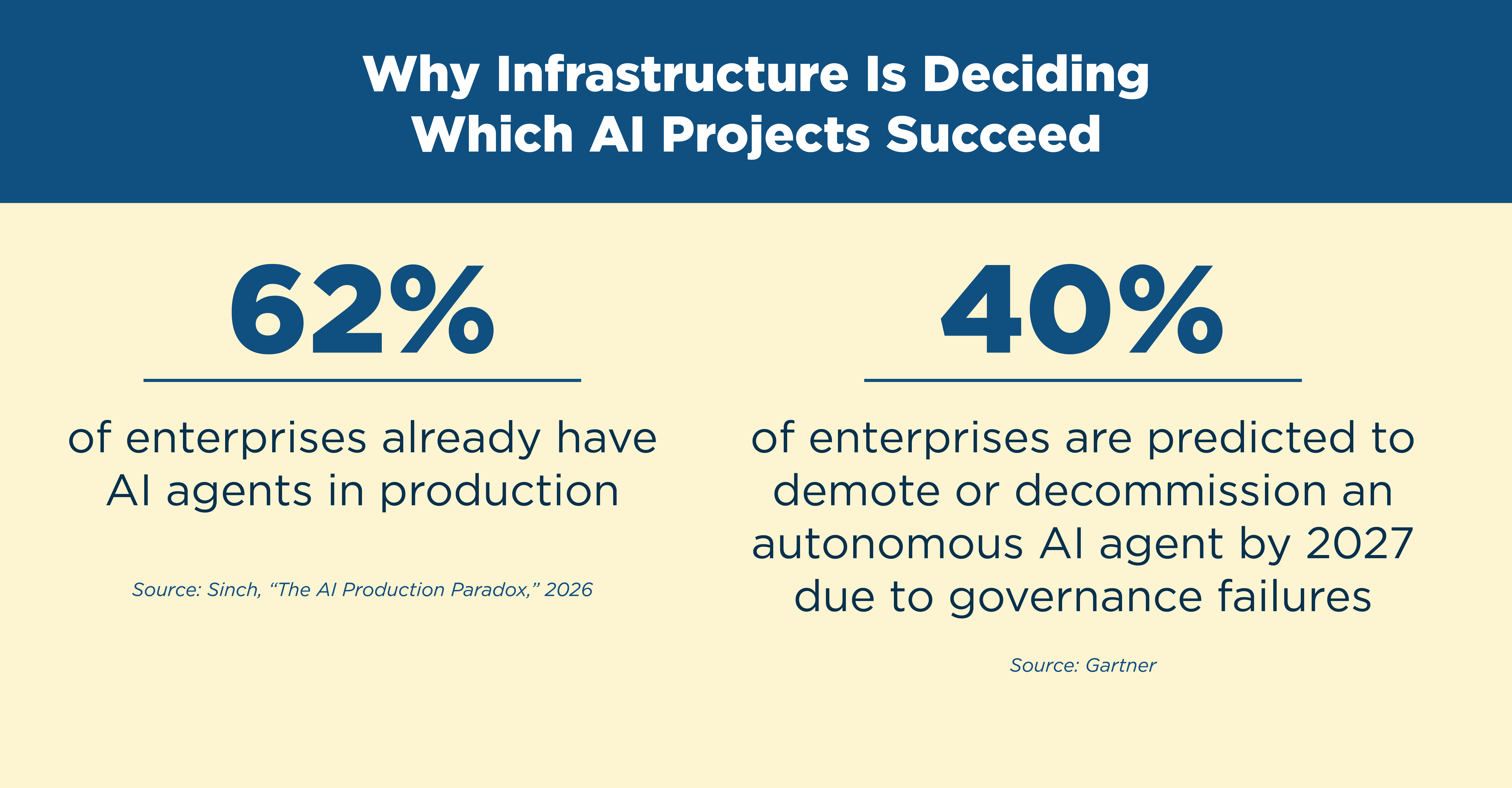
Sinch focuses on a different piece of the puzzle: the infrastructure an AI agent runs on. Its 2026 research report, The AI Production Paradox — surveying more than 2,500 enterprise leaders — found that 62% of enterprises already have AI agents in production, and identified infrastructure quality as the strongest predictor of AI success, ahead of the model itself or how much a company invests in governance.
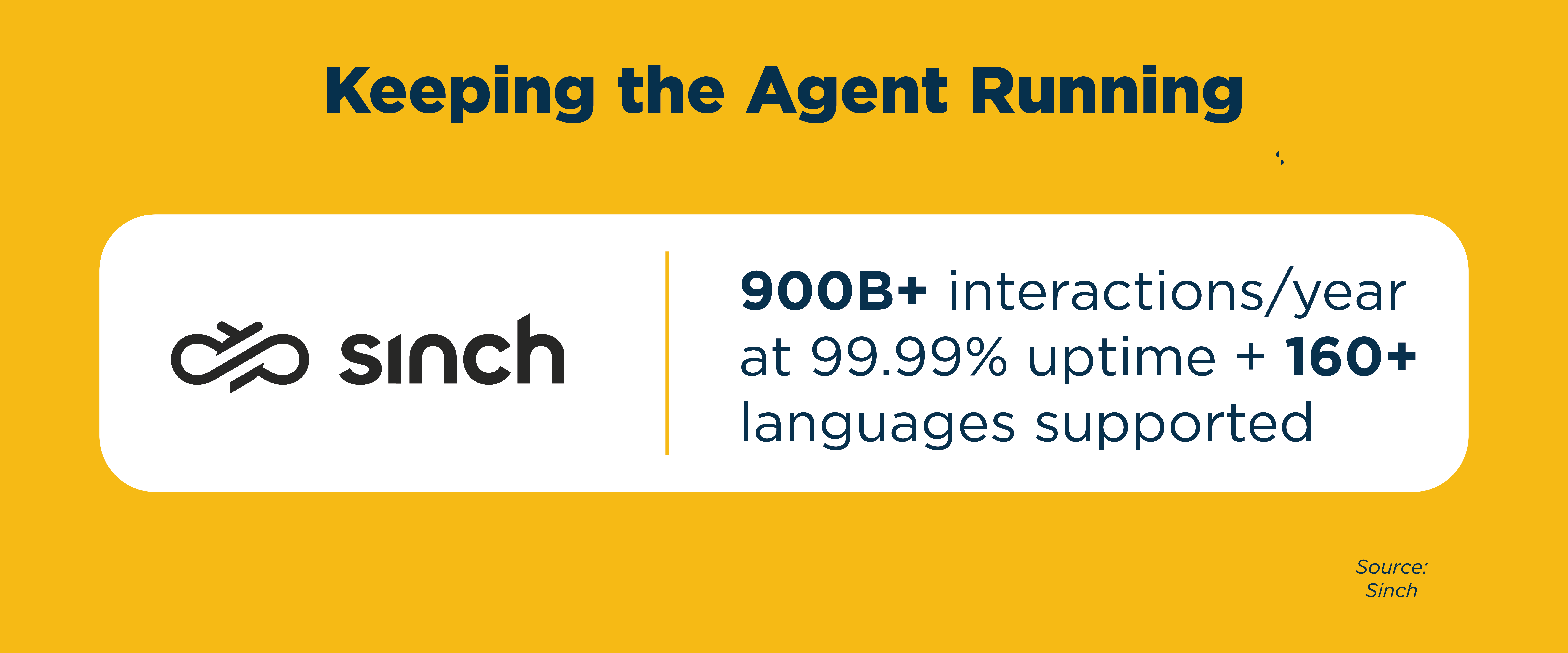
Sinch’s answer is enterprise-grade communications infrastructure — 900B+ interactions a year at 99.99% uptime — with AI embedded natively into voice, messaging, and email rather than added on top, including real-time fraud detection, sub-one-second latency voice AI across 160+ languages, and email deliverability monitoring. The result: an AI agent backed by a network built to keep pace with it.
Yellow.AI and Sinch take two different approaches to that challenge. Yellow.AI gets the agent ready before launch, and Sinch keeps the infrastructure underneath that agent reliable after launch. Depending on where a client’s AI project is running into trouble, either one can be the right conversation to start.
If a client is thinking about moving AI into production, that’s a great moment to bring in your Sandler Partners Sales Engineering team. We can help identify where the opportunity sits — and which Provider fits the need.
Author: